
Investing and Researching in Argentina
Uncover unsuspected opportunities: practical insights, data, and resources to help you make informed decisions.


Argentina’s financial landscape is as dynamic as it is diverse. With a mix of traditional industries, emerging sectors, and a complex macroeconomic environment, the country offers both challenges and opportunities for investors and researchers.
Key Sectors
Agribusiness: Argentina is a global leader in soy, wheat, and beef production. Advanced agritech and export infrastructure make the sector attractive for investment and research.
Energy: From conventional oil and gas to renewable energy projects like wind and solar farms, the energy sector is rapidly evolving and draws significant international interest.
Technology & Innovation: Argentina’s tech ecosystem is thriving, with hubs in Buenos Aires, Córdoba, Tierra del Fuego and Mendoza driving software, fintech, and biotech development.
Mining & Natural Resources: Lithium, gold, silver, and other minerals are abundant, particularly in the Northwest and Cuyo regions, offering high-value opportunities.
Financial Markets
Investors can access Argentina’s stock exchange (MERVAL), government bonds, and private equity markets. While currency volatility and inflation present challenges, careful research and local partnerships can mitigate risk. Understanding regulatory frameworks and market trends is essential for success.
Economic Insights
GDP & Growth: Argentina’s economy is large and diversified, with regional disparities that create both specialized opportunities and strategic challenges.
Trade & Exports: Strong links to global markets exist in agribusiness, energy, and manufactured goods. Export-oriented strategies are often the most profitable.
Investment Climate: Recent reforms aim to attract foreign investment, with incentives for technology, energy, and regional development projects.
Start Here: Market Overview
Tip for Researchers & Investors: Access detailed reports, data dashboards, and sector analyses in our downloadable Argentina Market Guides to gain a deeper understanding of trends and opportunities.
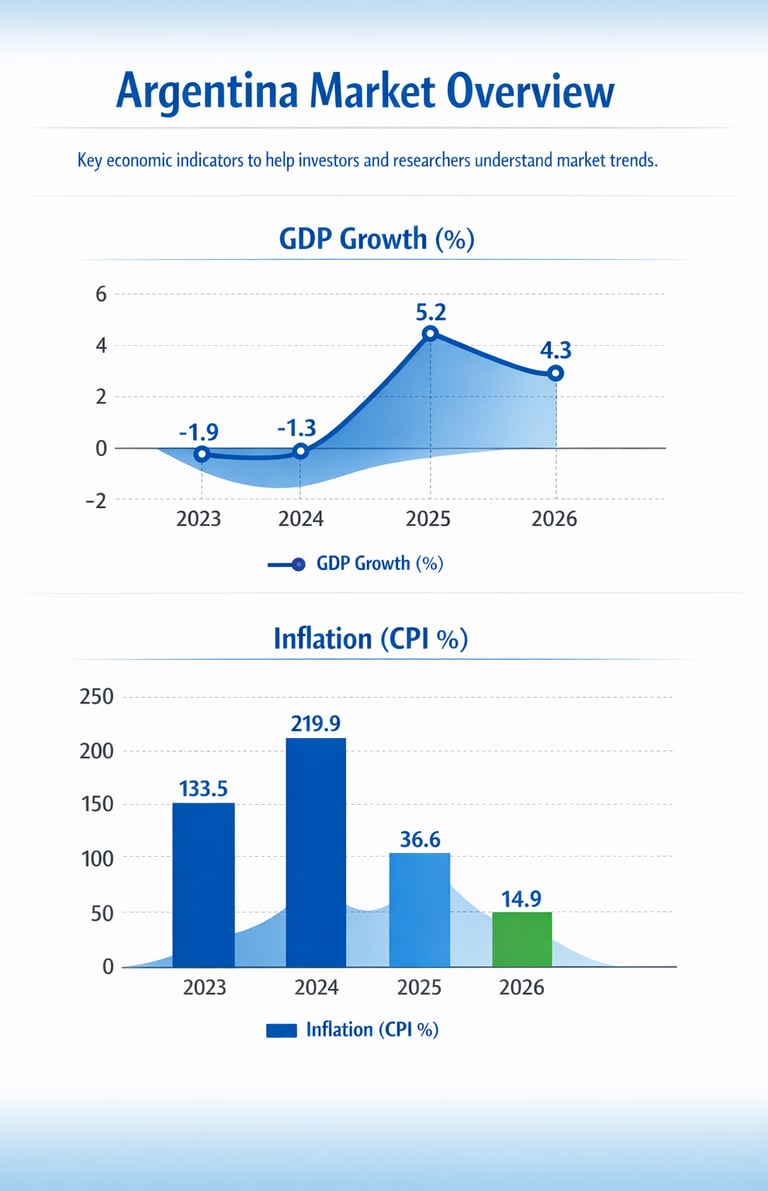
Argentina’s vast and diverse geography shapes a mosaic of regional economies, each with unique resources, industries, and opportunities for investment or research. Understanding these regional distinctions is key to making informed decisions and discovering hidden potential across the country.
Northwest (NOA)
The Northwest provinces — Jujuy, Salta, Tucumán, Catamarca, and Santiago del Estero — are rich in minerals, agriculture, and cultural heritage. Mining remains a strong economic driver, with lithium, silver, and other minerals attracting international attention. Agriculture thrives in fertile valleys, producing sugar, tobacco, and citrus. Local universities and research centers focus on agronomy, renewable energy, and mining technologies.
Northeast (NEA)
The Northeast — Misiones, Corrientes, Chaco, and Formosa — is defined by its natural resources and cross-border trade. Forestry, citrus production, and yerba mate are central industries, supported by agro-industrial research. The region is also rich in hydropower potential, highlighted by the iconic Yacyretá Dam. Investment opportunities often combine natural resource exploitation with sustainable practices.
Regional Economies & Resources
Antarctic and Atlantic Islands
Argentina’s southernmost territories, including the Antarctic sector and islands like the Falklands (Islas Malvinas), offer specialized research opportunities in climate, biodiversity, and sustainable resource management. While direct commercial investment is limited, scientific collaborations and governmental projects provide unique research avenues.
📥Download the Complete Rio Negro Business Outlook Guide by KnowArgentina.
Cuyo
Mendoza, San Juan, and San Luis form the Cuyo region, Argentina’s wine and energy powerhouse. Vineyards dominate Mendoza’s landscape, making it a hub for viticulture research, agribusiness, and export-focused investment. San Juan is known for mining, while San Luis has developed technology parks and renewable energy projects. Strategic logistics corridors make Cuyo attractive for manufacturing and export businesses.

Central Pampas
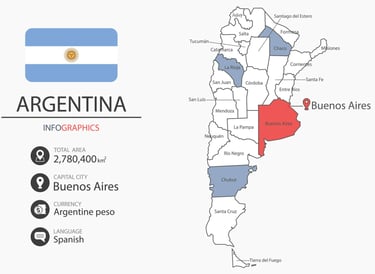
Buenos Aires, Córdoba, Santa Fe, and La Pampa represent Argentina’s agricultural heartland. The Pampas’ fertile plains produce grains, livestock, and dairy at a massive scale, driving food processing and export industries. Córdoba combines manufacturing, technology, and aerospace research, while Santa Fe excels in agribusiness and logistics. Investors will find well-established infrastructure and skilled labor networks.
Patagonia
The southern provinces — Río Negro, Neuquén, Chubut, Santa Cruz, and Tierra del Fuego — are rich in energy, tourism, and natural resources. Oil, gas, and wind energy are prominent, with Patagonia’s renewable energy potential increasingly attracting global attention. Fisheries, sheep farming, and adventure tourism create complementary economic opportunities. Research centers focus on environmental sciences, sustainable energy, and marine ecosystems.
Summary:
Argentina’s regional economies are diverse, dynamic, and full of opportunity. Each province combines natural resources, infrastructure, and research capabilities, making them attractive for targeted investment and collaboration. Use our downloadable province guides to explore sector-specific data, economic insights, and local contacts to plan your ventures effectively.!
Thinking about moving to Argentina?
Start off on the right foot — and skip the most common expat headaches.
We’ve put together a quick, honest guide based on real experiences from people who’ve made the move.
📥 Download your free PDF:
“Top 5 Mistakes When Moving to Argentina (And How to Avoid Them)”
Just drop your name and email below — we’ll take you straight to the download page.


Argentina offers a wide array of government programs, tax benefits, and support initiatives designed to attract investors, entrepreneurs, and researchers. Understanding these incentives can save time, reduce risk, and unlock opportunities that might otherwise go unnoticed.
Government Incentives
1. Tax Incentives and Credits
The Argentine government provides several tax relief options for businesses in priority sectors:
Technology & Innovation: Companies in software, biotech, and renewable energy often qualify for corporate tax reductions and accelerated depreciation.
Export-Oriented Projects: Special programs exist to reduce VAT and import duties on materials used for exports (RIGI), helping projects scale internationally.
Regional Development Incentives: Certain provinces provide local tax credits or exemptions to encourage investment in underdeveloped regions, particularly in the North and Patagonia.
💡Tip: Small and medium enterprises (SMEs) can sometimes combine federal and provincial tax benefits for maximum advantage.
2. Grants and Subsidies
Argentina isn’t just about tax breaks. For targeted sectors, you can access grants, co-financing, and subsidy programs:
Innovation Grants: The National Agency for Research and Innovation (Agencia I+D+i) funds projects in technology, renewable energy, and industrial research.
Export Promotion: The Export Promotion Agency (EXIM) offers financial support for international market entry, including logistics, marketing, and trade fair participation.
Green and Sustainable Projects: Renewable energy, waste management, and climate adaptation initiatives may qualify for government co-investment programs.
💡Tip: Many grants require collaboration with local universities or research centers — creating networks that can open doors to new partnerships.
🎁Bonus insight: Savvy investors often discover “hidden gems” — niche programs for sustainable agriculture, lithium projects, biotech, or tourism innovation — that aren’t widely advertised but can make a huge difference for early movers.
3. Investment Facilitation Programs
Beyond money, the government offers non-financial incentives that simplify doing business:
One-Stop Investment Offices: Certain provinces provide single-window support to navigate permits, licenses, and regulatory processes.
Fast-Track Approvals: Special economic zones and tech parks often offer accelerated bureaucratic procedures to help projects start faster.
Legal and Advisory Support: Government agencies can provide guidance on local labor laws, environmental compliance, and export regulations.
💡Tip: Combining financial and non-financial incentives can significantly improve ROI and reduce time to market.
4. How to Maximize Opportunities
Research First: Not all incentives are obvious — some are province-specific or sector-specific.
Combine Programs: Federal, provincial, and municipal incentives can often be stacked.
Partner Locally: Collaborating with universities, research institutes, and local businesses can unlock additional benefits.
Stay Updated: Incentive programs change frequently. Agencies often publish newsletters or have dedicated advisors.


Planning a move to Argentina? Discover everything you need to know about:
✦ Healthcare
✦ Education
✦ Housing
✦ Visas
✦ Cost of living
in our Free Argentina Relocation Guide, designed to help expats settle in with confidence.
If you haven’t done it yet, don’t forget to download 📥 our Comprehensive Argentina Relocation Guide – completely FREE!
Know Argentina
Discover diverse insights about Argentina's rich culture.
Connect
stay in the loop
info@knowargentina.com
© 2025. All rights reserved.