
Best Health Insurance for Expats in Argentina (2026 Guide)
A guide to the best health insurance options for expats in Argentina in 2026, including OSDE, Swiss Medical, healthcare costs, public hospitals, and new rules for foreigners.
EXPATSHEALTH INSURANCEMEDICAL
Gabriela Arellano
9/12/20267 min read
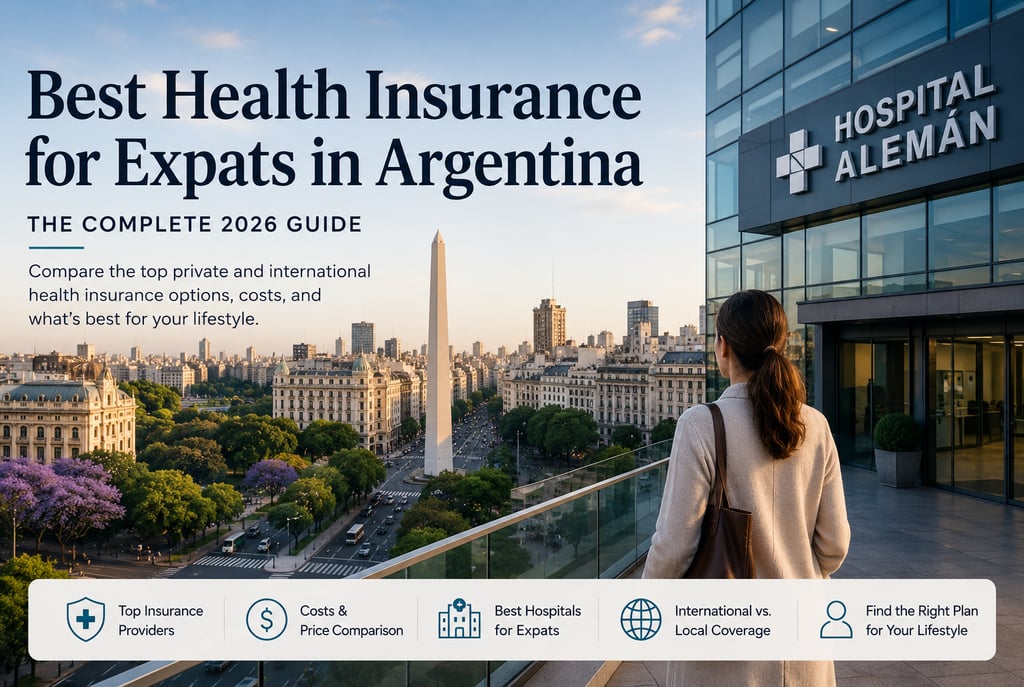
Argentina has long had a reputation for offering some of the best healthcare in Latin America. In Buenos Aires especially, private hospitals, specialists, and clinics can feel surprisingly modern and affordable compared to the United States or parts of Europe.
For many foreigners, healthcare becomes one of the country’s biggest quality-of-life advantages after moving here.
But understanding how the system actually works is not always straightforward.
Over the past few years, inflation, changing regulations, and new immigration policies have altered how foreigners access healthcare in Argentina. Information online is often outdated, especially older articles that still describe public healthcare as completely free for everyone.
The reality in 2026 is more nuanced.

Most expats eventually choose private healthcare because it offers shorter wait times, better infrastructure, and a more predictable experience — particularly in Buenos Aires. Others rely on international insurance plans while moving between countries as digital nomads or remote workers.
The right option depends on your residency status, budget, age, Spanish level, and how long you plan to stay in Argentina.
In this guide, we’ll explain how the Argentine healthcare system works today, whether foreigners can still use public hospitals, which private insurance providers are best for expats, and how much healthcare realistically costs in 2026.
How Healthcare Works in Argentina
Argentina’s healthcare system operates through a combination of public hospitals, employer-linked coverage, and private insurance plans known locally as prepagas.
Public hospitals are funded through taxes and exist throughout the country. Historically, foreigners could often access these hospitals without major restrictions, which contributed to Argentina’s reputation for universal healthcare. In practice, however, the quality and experience have always varied significantly depending on the city, hospital, and type of treatment needed.
Alongside the public system is the obra social system tied to formal employment. Argentines working for local companies typically contribute part of their salary toward healthcare coverage through these labor-linked programs. Some people rely entirely on their obra social, while others combine it with additional private coverage for better access to specialists and clinics.
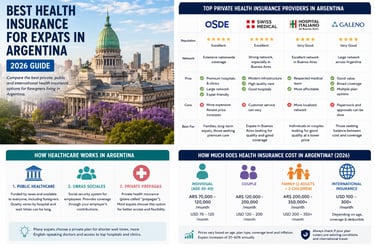
Most expats and long-term foreigners eventually use private prepaga plans instead. These function similarly to private insurance networks and provide access to private hospitals, specialists, diagnostics, and faster appointments. Companies like OSDE, Swiss Medical, Galeno, and Hospital Italiano dominate this sector.
For foreigners living in Buenos Aires long term, private healthcare is usually where the system works best.
Can Foreigners Still Use Public Healthcare in Argentina?
As of August 12, 2026, Argentina has a formal procedure governing non-emergency healthcare for foreign nationals at hospitals administered by the national government.
Permanent residents may continue to use the public healthcare system under the same conditions as Argentine citizens. To establish this status, they generally need to present a valid Argentine DNI showing permanent residency.
Foreign nationals who cannot demonstrate permanent residency must either present valid health insurance covering the requested service or pay the hospital’s applicable fee before receiving routine or scheduled care.
Emergency treatment remains guaranteed regardless of immigration status or ability to pay. Administrative procedures cannot delay emergency evaluation or treatment, and the attending healthcare professional determines whether a condition qualifies as an emergency.
The distinction between national, provincial, and municipal hospitals is important. Resolution 1066/2026 applies directly to facilities administered by the national government. Procedures at provincial and municipal hospitals may differ, so travelers and temporary residents should confirm the rules of the specific facility and carry proof of health or travel insurance.
Is Healthcare in Argentina Actually Good?
Overall, yes — especially within the private healthcare system.
Argentina has a long medical tradition and produces highly trained doctors, particularly in major urban centers like Buenos Aires, where several hospitals and clinics are respected throughout Latin America. Many expats are surprised by how accessible specialist care can be compared to their home countries, with appointments that may take months elsewhere often available within days in Argentina’s private system.
Another factor that stands out for many foreigners is affordability. Out-of-pocket consultations, diagnostics, and common medications can still feel remarkably inexpensive compared to healthcare costs in the United States or parts of Europe.
At the same time, Argentina’s healthcare system reflects the country’s broader economic realities. Inflation affects many aspects of the sector, particularly insurance pricing, staffing costs, and imported medical supplies. Prepaga prices can change frequently, sometimes several times within a single year.
However, Argentina also has a significant domestic pharmaceutical industry, with nationally owned laboratories supplying a large share of the local market. This helps keep many common medications relatively affordable and widely available despite broader economic instability.
The system is not without frustrations. Administrative processes can feel inconsistent by North American or European standards, especially for foreigners navigating residency paperwork, insurance approvals, and local bureaucracy for the first time.
Still, for many expats, the overall value proposition remains extremely attractive: access to highly qualified doctors, modern private hospitals, and relatively affordable care in one of Latin America’s strongest medical systems.
Best Private Health Insurance Providers for Expats
OSDE
OSDE is generally considered the premium private healthcare provider in Argentina. Among locals and long-term expats, it has one of the strongest reputations for hospital access, specialist availability, and overall quality of care.
Many of Argentina’s best private clinics and doctors work within the OSDE network, especially in Buenos Aires.
The main downside is cost. OSDE plans are usually more expensive than competing providers, and prices can rise frequently because of inflation adjustments. Some foreigners also encounter additional paperwork requirements depending on residency status.
For families, retirees, and expats planning to stay in Argentina long term, OSDE is often viewed as the safest high-end option.
Swiss Medical
Swiss Medical is another major player in Argentina’s private healthcare sector and is especially common in Buenos Aires.
It generally offers a strong balance between quality and cost, making it popular among younger professionals and mid-range expats. The network includes modern clinics and good specialist coverage, though experiences with administration and customer support can vary.
Compared to OSDE, Swiss Medical often feels slightly less premium, but still comfortably above average by regional standards.
Hospital Italiano
Hospital Italiano occupies an interesting middle ground because it operates both as a respected hospital and an insurance network.
Many locals consider it one of the country’s strongest medical institutions academically and clinically. Coverage tends to be more affordable than top-tier OSDE plans, while still offering access to highly respected specialists and facilities.
The tradeoff is flexibility. The system can feel more centralized and less expansive than larger prepaga networks.
For Buenos Aires residents who prioritize medical quality over luxury branding, Hospital Italiano is often an excellent value.
Galeno
Galeno is another widely used prepaga provider with broad national coverage.
Experiences tend to vary more depending on location and plan tier, but many expats use Galeno successfully, especially outside Buenos Aires where regional coverage matters more.
Pricing is often competitive compared to premium providers, although administrative frustrations are not uncommon.
International Health Insurance Options
Not every foreigner in Argentina wants to join a local prepaga system.
Digital nomads, remote workers, and people dividing their time between countries often prefer international insurance providers such as Cigna Global, Allianz, IMG, or SafetyWing.
These plans are usually more expensive than local Argentine insurance, but they offer portability and international coverage that local prepagas generally do not.
For someone spending only a few months in Argentina before moving elsewhere, international coverage may make more sense than navigating local enrollment systems and residency paperwork.
Some international providers also make the visa and immigration process easier by offering documentation accepted for entry requirements and residency applications.
How Much Health Insurance Costs in Argentina in 2026
Healthcare costs in Argentina change frequently because prepaga companies adjust pricing regularly in response to inflation and healthcare-sector costs. Major providers like OSDE, Swiss Medical, and Galeno have continued implementing periodic increases throughout 2025 and 2026.
According to pricing data published through Argentina’s Superintendencia de Servicios de Salud transparency system, costs vary significantly depending on age, provider, region, family structure, and plan tier.
For younger adults, entry-level prepaga plans may start around ARS 100,000–120,000 monthly, while premium plans through providers like OSDE or Swiss Medical can exceed ARS 1 million monthly for families or older applicants.
For a couple in their 30s without children, realistic 2026 pricing examples may look roughly like this:
Best Hospitals in Buenos Aires for Expats
Buenos Aires has several hospitals and clinics that are particularly popular among foreigners.
Hospital Alemán is widely respected for its specialists and modern facilities. Hospital Italiano has one of the strongest reputations academically and medically, especially for diagnostics and complex care. Austral University Hospital is frequently ranked among the country’s top institutions, while Swiss Medical centers are popular for their convenience and broad urban coverage.
Many expats are surprised by how modern some private hospitals in Buenos Aires feel compared to what they expected before arriving in Argentina.
Appointments are often coordinated quickly through WhatsApp, and specialist access can be dramatically faster than in countries with overloaded public systems.
Which Type of Coverage Makes the Most Sense?
For long-term residents planning to settle in Argentina, local prepaga plans usually provide the best combination of affordability and access.
Digital nomads and frequent travelers often prefer international insurance because it allows them to move between countries more easily.
Families typically prioritize stronger hospital networks and pediatric coverage, which pushes many toward OSDE or higher-tier Swiss Medical plans. Budget-conscious expats often gravitate toward Hospital Italiano or more basic Galeno plans instead.
The best choice depends less on finding the “perfect” provider and more on matching coverage to your lifestyle and long-term plans.
Common Mistakes Expats Make
One common mistake is assuming Argentina’s public healthcare system still works exactly as it did a few years ago. Many articles online have not been updated to reflect the 2025 reforms affecting foreigners without permanent residency.
Another mistake is focusing only on monthly price without considering hospital access, specialist availability, and administrative quality. The cheapest plan is not always the best value if scheduling appointments becomes difficult.
Many foreigners also underestimate how quickly prices can change because of inflation. Insurance costs in Argentina are rarely static, and annual budgeting can become complicated if you expect fixed long-term pricing.
Finally, some expats delay enrolling in private coverage until they urgently need care. Older applicants often face significantly higher premiums and more restrictive conditions.
So, Is Healthcare in Argentina Worth It for Expats?
Healthcare remains one of Argentina’s strongest advantages for many foreigners, even after the recent regulatory changes.
The country no longer offers the same unrestricted public healthcare access that it once did for tourists and temporary residents, and many older articles online no longer reflect the current reality. Emergency care is still broadly available, but relying entirely on the public system has become more uncertain for non-residents.
At the same time, Argentina’s private healthcare sector continues to offer excellent value compared to many Western countries.
For expats living in Buenos Aires especially, private insurance often provides access to highly trained doctors, modern hospitals, and specialist care at prices that still feel remarkably affordable internationally.
The system is not perfect. Inflation, bureaucracy, and administrative inconsistencies remain part of daily life in Argentina.
But overall, many foreigners still find that healthcare here delivers a level of quality and accessibility that is difficult to match at the same cost elsewhere.
Frequently Asked Questions
August 2026 Update: New Rules at Nationally Administered Public Hospitals
As of August 12, 2026, Argentina has a formal procedure governing non-emergency healthcare for foreign nationals at public hospitals administered by the national government.
Explore more posts in our Expats category
Know Argentina
Discover diverse insights about Argentina's rich culture.
Connect
stay in the loop
info@knowargentina.com
© 2025. All rights reserved.